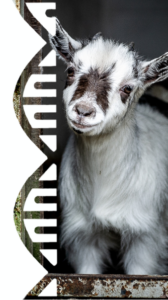
 The same DNA can be found in every cell of an animal’s body. That’s why you can take a sample from just about anywhere on the animal for genetic testing. The traditional source of DNA for horse and goat genetic testing has always been the root bulb of hairs pulled from the tail, mane, or other places on the animal’s body. The hairs themselves do not possess enough DNA for testing so if the hair bulb is not properly pulled along with the hair, there is little chance of success for genetic testing.
At GenSol, we have always relied on our ability to innovate to provide customers with faster and easier methods for testing. When we first started in the industry, most samples for DNA testing consisted of blood samples taken by a veterinarian. We decided that the added expense and complexity of dealing with blood was not sufficient to make genetic testing accessible for all breeders and pet parents. So, we were one of the first companies to use cheek swabs for DNA collection in dogs. It was not long before the whole industry followed suit and cheek swabs are now the standard sample type in dogs.
Fast forward years later and we started getting requests from our customers to expand our testing services to other species. When we started exploring adding horses and goats to our genetic testing services, we knew it was time to innovate yet again. We started by trying the same cheek swabbing method on horses and goats with very limited success. It turns out that an animal that spends most of the day munching on grass and weeds turns over their cheek cells much faster than dogs and cats that only eat once or twice a day. So, we turned to the other potential part on their body that we knew should have DNA . . . their nose. Using the same swabs we use for dog cheek swabbing, we took a sample at the entrance to their nasal cavity and the results couldn’t have been better. In some cases, we saw more DNA than we did from our dog cheek swabs. The great thing was there was no need to clean the nasal cavity and the process of taking the sample was simple and easy. The only thing we were careful of was not to insert the swab too deeply into the nasal cavity to prevent hurting the animal. We found that sampling deeper in the nasal cavity didn’t provide any better of a sample. So, besides being careful not to insert the swab too deep, we had found a simpler and easier way for horse and goat owners to take their sample for genetic testing.
Fast forward to today and our recent launch of testing services for horses and goats. Our new first of its kind nasal swab sampling method combined with the same fast, accurate, and affordable testing methods developed on dogs makes it easier than ever to test your horse or goat. With tests starting at $29.90 and results available 1-2 business days after samples arrive at the lab, we aim to provide breeders and pet parents with the information they need to make crucial breeding and health care decisions. Afterall, it’s our customers that asked for us to add horses and goats and we listened. Don’t hesitate to reach out if you have any questions about the new nasal swabbing process and together, we can create a healthier future for all our animal companions.
Watch our horse sample collection video here.
Watch our goat sample collection video here.